


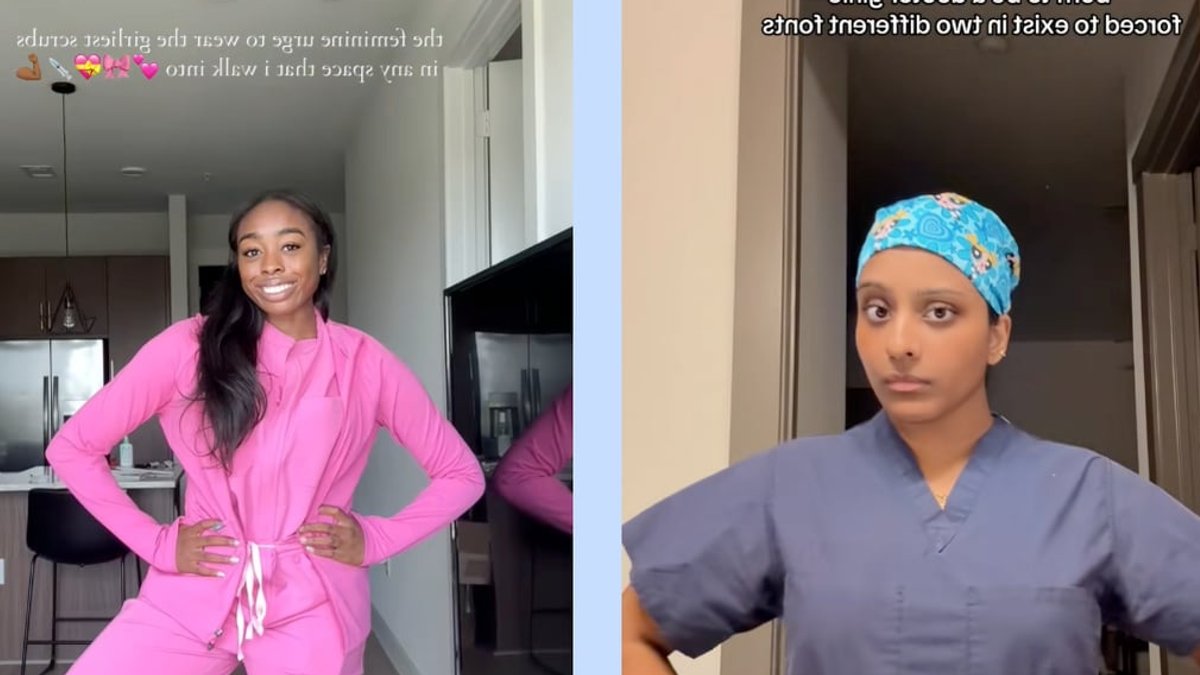
Tiffany Nguyen stands out among healthcare professionals. At 24, she is a physician assistant in training with a tooth gem on her left incisor and bright acrylic nails—details rarely seen in medical school brochures. On TikTok, where she has nearly 25,000 followers, she describes herself as “your pre-med older sister,” offering straightforward advice about the profession while challenging the notion that providers must leave their personalities outside the hospital.
Nguyen represents a growing group of Gen Z healthcare workers changing the field. They reject the traditional image of doctors who live in scrubs and have no life beyond the hospital. Instead, these professionals bring their full selves to work, valuing balance, authenticity, and well-being without compromising patient care.
The weight of representation
Nguyen’s approach goes beyond appearance. Raised in a first-generation Vietnamese immigrant household in Ohio, she often served as her family’s medical translator, explaining diagnoses and care plans to her mother and grandmother, who had limited formal education. “I haven’t seen any medical provider that looks like me,” she explains. “Being cared for by people who don’t represent or understand the language your family speaks is isolating.”
That experience led her to volunteer at the Asian Free Health Clinic during college and later pursue a career as a physician assistant. “I want to be the PA who represents Asian American, low-income, and non-English speaking communities,” she says. “When I speak, I carry my family and my patients’ voices with me.”
Related: How to Safely Store Your Diamond Ring When Not Wearing It
Her outlook changed further after she suffered a hemorrhagic stroke in April. While recovering in the ICU, her biggest concern wasn’t her health but finances. “Even healing felt like a luxury I couldn’t afford,” she says. The ordeal strengthened her belief that healthcare must consider patients’ financial situations, not just their medical needs.
Nguyen’s story challenges the stereotype of Gen Z as lazy or self-centered. For her and many peers, the generation’s defining trait is resilience, shaped by social media, the pandemic, and economic uncertainty. They enter medicine with a clear understanding of its flaws, determined to improve what they can without burning out.
This shift isn’t just about personal branding. It reflects a need for survival. The old model of medicine, where providers sacrificed everything for the job, is unsustainable. Gen Z demonstrates that empathy and competence don’t require self-erasure.
A new professional standard
Aishwarya Addepalli, a 27-year-old second-year resident, sees her generation differently than critics do. “People assume we’re young and less disciplined,” she says. “But I think it’s the opposite.” For Addepalli, Gen Z’s self-awareness is an advantage. She points to the pandemic as a turning point—Zoom interviews for medical school, canceled rotations, and the sudden exposure of systemic healthcare gaps. “We’ve gone through a lot,” she says. “We still care deeply about patients, but we’re also more deliberate about surviving and taking care of ourselves.”
That deliberate approach appears in unexpected ways. Addepalli, who has practiced Bharatanatyam since childhood, gained attention on TikTok for a video blending the classical Indian dance with Doja Cat’s “Woman.” She didn’t post it for fame—dance has always been her mental health outlet, a topic she discussed in medical school interviews. “I don’t see it as better or worse,” she says of her generation’s methods. “We’re just different. Instead of making our career our entire life, we use other interests to help us excel professionally.”
Related: 3 Ways to Highlight Your White Sneakers
Erica Ogwumike, a 28-year-old dermatology resident, follows that philosophy. Coming from a family of elite athletes—her sisters, Chiney and Nneka, play in the WNBA—she didn’t abandon sports for medicine. She played Division I basketball in college, competed in the Tokyo Olympics while in medical school, and has shared the balancing act on TikTok since 2018. “In my generation, being multidimensional was emphasized,” she says. “You’ll find doctors who studied ballet, dance, or art history. This wasn’t unheard of before, but now it’s becoming the norm.”
Ogwumike attributes her generation’s focus on wellness to growing up when mental health was part of the curriculum. “I can’t remember a time in school when wellness wasn’t discussed,” she says. That mindset carries into their careers. While older generations might have accepted 80-hour workweeks as necessary, Gen Z providers set boundaries, arguing those limits make them better at their jobs. “I want to help my patients, but I know I can’t do that if I don’t take care of myself first,” she says.
For patients who’ve felt overlooked by healthcare providers, this change could make a difference. Gen Z’s emphasis on balance isn’t a rejection of the profession but a recalibration. They refuse to sacrifice their identities, passions, or health for the job. Instead, they use those elements to become more empathetic and capable providers. The message is simple: you don’t need to break yourself to help others.
Many in this generation also pay close attention to accessory choices that reflect their personal style while maintaining professionalism.


